
Knife Master: Challenge Game
Blastproof GamesArcade
4.915.00 Reviews
- Version
- 2.0.22
- Installs
- 10.00K
- Age Rating
- Everyone
Screenshots
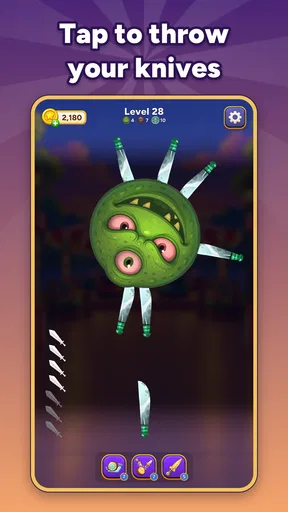
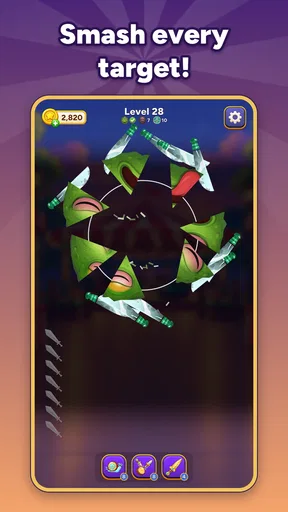
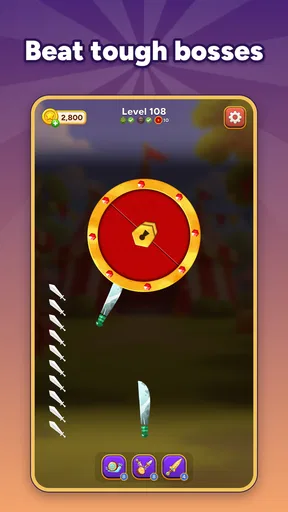
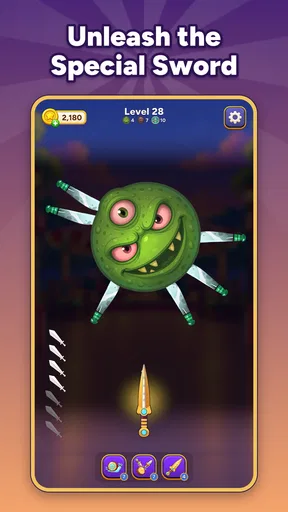



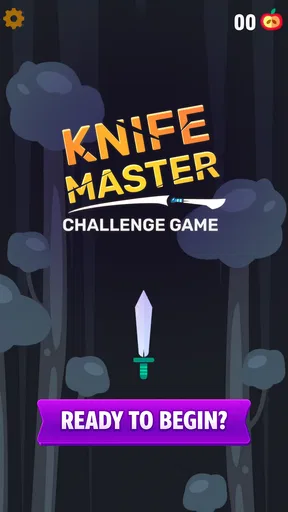
Our Review of Knife Master: Challenge Game
 Analysis by Appyee
I spent time with Knife Master: Challenge Game as a quick arcade game built around a very simple idea: throw knives, break wooden logs, and work your way toward boss encounters. That simplicity is its biggest strength. I can open it for a short break, understand the objective immediately, and start playing without learning a complicated control scheme or reading a long tutorial.
It is a free game from Blastproof Games, aimed at Everyone, and its store category is arcade. The current release is version 2.0.22, with support beginning at Android 7.1. That combination makes it approachable for older Android devices as well as newer phones, although the experience still depends on how smoothly a particular device handles the game.
My overall impression is positive, especially if you enjoy short reflex challenges rather than a deep adventure or a long-form progression system. The game has a clear rhythm: watch the target, time the throw, avoid hitting knives already stuck in the log, and try to finish the stage cleanly. It is easy to start, but the timing becomes much less forgiving when the target rotates unpredictably or the available space becomes crowded.
How the current arcade experience feels
I find the appeal here in how quickly a simple throw becomes a test of attention: the more crowded the rotating target gets, the more useful it is to pause and read the available space instead of tapping on impulse. That makes the game easy to dip into but not automatically relaxing, especially when a run goes wrong. I’d approach each session as a small timing challenge, then consider what helps keep that challenge smooth on my device.
Simple controls with a surprisingly demanding rhythm
The appeal comes from the contrast between the one-action control and the concentration it requires. The basic throw is easy to understand, but success depends on choosing the right moment rather than tapping as quickly as possible. I found myself changing from impatient rapid taps to a slower visual rhythm once the log already contained several knives.
That makes each attempt feel more deliberate than the store summary might suggest. The target is not just something to hit; it becomes a timing puzzle. A throw that looks safe at one moment can become dangerous after the log turns, so I learned to watch the gaps instead of focusing only on the next open section.
The useful skill is controlled patience, not fast tapping. That is an important distinction for new players. If you treat every stage like a speed test, you are likely to waste attempts. Waiting for a clean opening usually works better, particularly when the log rotation makes the safe area narrow.
Why the boss encounters matter
The boss stages give the game a sense of destination. Without them, the experience would be a sequence of similar log-breaking tasks with little change in purpose. Bosses make the player feel that ordinary stages are building toward a more demanding test, even though the core action remains familiar.
I also like that the boss idea fits the game’s compact design. It does not require a large world, a complicated story, or a collection of unrelated mechanics. The challenge stays focused on timing and accuracy. Players who prefer arcade games with a clear loop will probably appreciate that restraint.
At the same time, anyone expecting a substantial boss system with elaborate patterns, character abilities, or strategic equipment should keep expectations modest. This is still a knife-throwing arcade game first. Its bosses add pressure and variety to the central action rather than turning it into a different genre.
A practical game for short sessions
I see this as a good choice for small gaps in the day: waiting for an appointment, taking a short break from work, or winding down before bed without committing to a long match. The immediate objective means I do not need to remember a complicated quest or reconstruct where I left off.
That convenience also makes it suitable for younger players who enjoy straightforward challenges. The Everyone age rating matches the uncomplicated presentation and accessible premise. Parents should still judge whether a reflex-focused game suits a particular child, but the basic concept is easy to understand without advanced reading or genre knowledge.
For commuting, I would treat it as a game for brief moments rather than something to depend on for a long uninterrupted journey. Arcade attempts can be satisfying in small portions, but repeating the same central action for an extended session may feel less rewarding than a puzzle game with more variety or a platformer with exploration.
What version 2.0.22 tells existing players
The current version is 2.0.22, while the game was released on Jul 27, 2026. That gives the product a current version identity rather than leaving the impression of an untouched first release. For someone returning after an earlier installation, checking that the game has updated to the latest available build is sensible before judging the present experience.
I would separate that confirmed version information from assumptions about what changed internally. A version number alone does not tell me that a particular mechanic, menu, balance issue, or visual element was redesigned. The practical takeaway is simply that players should evaluate the current build they actually install, especially if they remember an older session.
For existing users, the most important effect of a current release is continuity: the game remains positioned as a compact arcade challenge rather than shifting into a larger, more complicated format. That is good news if you liked the original directness. It may be less exciting if you were hoping for a major expansion into character progression, multiplayer competition, or a broader adventure structure.
Three playing habits that improve the experience
My first useful habit was to stop aiming at the biggest visible gap. The widest opening is not always the safest one because the log continues rotating while the knife is in motion. I had better results when I considered where the gap would be at the moment of impact, not only where it appeared when I tapped.
Second, I found it helpful to treat every knife already attached to the log as part of the puzzle. Those knives are not just decoration; they reduce the usable space and make careless throws more costly. Before tapping, I quickly scan the whole visible circle and choose a route that leaves room for the following throw rather than solving only the immediate moment.
Third, I recommend using short practice sessions instead of forcing progress after several failed attempts. When my timing became rushed, more attempts did not automatically produce improvement. Taking a short pause helped me return with a clearer sense of the rotation. This is particularly useful before a boss, where frustration can make a manageable pattern seem impossible.
Where the game still feels limited
The central mechanic is focused, but that focus can become repetition. If you need a game with several distinct modes, a narrative campaign, collectible systems, or a wide range of controls, this will probably feel too narrow. The knife-and-log loop is the reason to play, and it is also the main source of fatigue when the novelty wears off.
There is also a natural ceiling to the type of mastery available here. You can improve your observation, timing, and patience, but players who want strategic planning across multiple systems may find that the game does not give them enough to manage. It is better understood as a precision arcade test than as a complete progression-heavy mobile game.
Another limitation is emotional variety. The premise creates immediate tension, but it does not automatically provide the sense of discovery found in exploration games or the personal attachment found in story-driven titles. I enjoyed the clean challenge, yet I would not choose it when I wanted characters, world-building, or a relaxing activity with no pressure.
How it compares with familiar arcade alternatives
Compared with endless runners, this game is more concentrated. An endless runner usually asks me to react while moving through a changing environment, whereas Knife Master keeps my attention on a single rotating target. That makes it easier to understand but less varied in movement and scenery.
Compared with match-three games, it offers less planning and fewer long-term combinations. Match-three play is often about building a chain of decisions across a board; here, the important decision is usually the timing of the next throw. Players who prefer immediate reflex feedback may find this more satisfying, while players who enjoy setting up complex turns may prefer a puzzle alternative.
Compared with physics-based throwing games, the experience feels more controlled and less experimental. The challenge is not mainly about discovering how objects behave through trial and error. It is about reading rotation and placing knives accurately. That makes the learning curve easier to explain, though it also means there is less room for creative solutions.
In my view, the best alternative depends on the kind of break you want. Choose this game when you want a focused timing challenge that starts quickly. Choose a runner for movement and scenery, a puzzle game for planning, or a physics game for experimentation. It does not need to beat all of those options; it only needs to deliver its particular form of arcade concentration well.
Who should install it, and who should skip it
I would recommend it to someone who likes games with one clear rule and a gradually sharper execution test. It is especially suitable for players who enjoy retrying a stage to improve timing rather than collecting a large amount of content. It also works for people who want a free game that can be understood in seconds.
The free price lowers the barrier to trying it, and the game has reached over ten thousand installs with an average rating of 4.9 from around one hundred sixty ratings. Those figures suggest a favorable early response, although they should be treated as context rather than a guarantee that every player will enjoy the same level of repetition.
I would skip it if you dislike failure-based arcade loops or if you need constant novelty. Players looking for online competition, extensive customization, a substantial story, or a broad set of minigames should choose a different type of mobile title. The game’s appeal depends on finding satisfaction in small improvements, such as recognizing a rotation pattern sooner or placing a knife with less hesitation.
Questions I would consider before downloading
If you are wondering whether it is suitable for an older Android phone, the stated minimum operating system is Android 7.1. That is helpful for compatibility, but operating-system support does not guarantee identical performance on every device. I would still keep expectations realistic if the phone is old, heavily loaded, or prone to slowdowns in other games.
If you are asking whether it is free to start, yes: the listed price is free. That makes it easy to test during a short break without committing money upfront. I would approach it as a compact arcade pastime rather than assuming that a free download will provide the depth of a premium game.
If you want to know whether the Everyone rating makes it broadly accessible, the answer is generally yes from a content perspective. The premise is simple and the controls are easy to grasp. The real question is not whether the rules are complicated, but whether the player enjoys repeated precision attempts.
If you are returning from an older installation, the current version to look for is 2.0.22. I would update before forming an opinion, because the present build is the one that represents the game now. I would not assume that an update means a complete redesign, though; the confirmed identity remains that of a focused arcade title.
Finally, if you are deciding whether it can replace your main mobile game, I would say probably not for most players. It works better as a companion game: something to open for a few minutes when you want a direct challenge. Its strength is immediate focus, not a huge amount of content or a long session structure.
My recommendation after playing
Blastproof Games has kept the concept easy to approach while giving it enough timing pressure to make each successful stage feel earned. I like that the game does not bury its main idea under unnecessary systems. The knife placement, rotating log, and boss goal provide a clean loop that can be picked up quickly and practiced over time.
The trade-off is equally clear. Once the basic rhythm becomes familiar, the experience depends heavily on whether you enjoy repeating a precise action and refining your reactions. That is not a flaw for an arcade game, but it is a meaningful limitation for anyone seeking variety or a deeper sense of progression.
My recommendation is to try it when you want a free, focused timing game rather than a full-length mobile adventure. It is approachable, compact, and well suited to short sessions. I would keep it installed for quick breaks, especially when I want a challenge that requires attention without demanding a long commitment. I would look elsewhere for story, exploration, multiplayer depth, or constantly changing gameplay.
Verdict
Strengths of Knife Master: Challenge Game
- Simple controls make it easy to start playing immediately.
- Short rounds are ideal for quick breaks or casual sessions.
- Increasing difficulty keeps the challenge engaging over time.
- Accurate timing gives successful throws a satisfying feel.
- Lightweight gameplay works well on most modern mobile devices.
Limitations of Knife Master: Challenge Game
- Repeated throwing mechanics may become monotonous after extended play.
- Later levels can feel frustrating when timing windows become very narrow.
- Progress may rely heavily on trial and error.
- Limited gameplay variety reduces long-term replay value.
- Ads may interrupt the experience, depending on the version installed.
Similar Picks in This Category
View All
Subway Surfers
SYBO Games4.6

Stickman Party 234 MiniGames
PlayMax Game Studio4.6

Subway Princess Runner
Ivy4.4

Temple Run
Imangi Studios4.2

Zombie Tsunami
Mobigame SAS4.6

Stack Ball - Crash Platforms
CASUAL AZUR GAMES4.5
Frequently Asked Questions
What is Knife Master: Challenge Game?
Knife Master: Challenge Game is an arcade-style skill game focused on timing, precision, and quick reactions. The main objective is usually to throw knives at rotating targets without hitting knives that are already embedded in the board. As you progress, targets become more difficult, movement patterns change, and successful attempts require patience rather than simply tapping as quickly as possible.
How do you play Knife Master: Challenge Game?
Gameplay is generally simple to understand: tap the screen to throw a knife toward the target and try to land it in an available space. You must carefully observe the target’s rotation and choose the right moment to act. Some stages may include fruit, bonuses, boss-style targets, or special challenges. Completing levels depends on accuracy, rhythm, and avoiding collisions.
Is Knife Master: Challenge Game free to download and play?
Knife Master: Challenge Game can typically be downloaded and played without an upfront purchase, although the exact availability and pricing may vary between Android and iOS. Like many free arcade games, it may include advertising, optional purchases, or rewards connected to viewing ads. Before downloading, check the store listing for current in-app purchase details and any regional differences.
Does Knife Master: Challenge Game require an internet connection?
The basic knife-throwing gameplay may work without a constant internet connection, which makes the game suitable for short sessions while traveling or when mobile data is unavailable. However, advertisements, cloud features, leaderboards, updates, or reward systems may require internet access. Offline behavior can differ by device and version, so it is best to test the game after installation.
Is Knife Master: Challenge Game suitable for children and casual players?
The controls are easy to learn, making Knife Master: Challenge Game accessible to casual players and younger users who enjoy short arcade challenges. Nevertheless, the game can become demanding because later levels require concentration and precise timing. Parents should review the age rating, advertising, and optional purchases before allowing children to play, especially if the device has payment methods enabled.
Play our best games!


